 |
 |
Kent Online Parish Clerks |
|
 |
 (Click photo for larger view) |
Rainham - Manors, Castles and other significant Estates |
|
Mere's Court
The paramount manor of MILTON claims over this parish, subordinate to which is the manor of MERE, otherwise MERE'S COURT, which lies in the borough of Mere, in the southern part of this parish, adjoining Bredhurst, and was, in very early times, part of the possessions of a family which gave name to this district, as well as another estate contiguous, formerly called Merethorne, but now generally denominated Maresbarrow, corruptly for Mere's borough.1
Peter de Mere and Walter and Geoffry de Meredale were owners of these and other estates in this parish, as early as the reign of King John. However, previous to that of Edward I, the manor of MERE, with MERETHORNE otherwise MERESBOROUGH, had become the property of Roger de Leyborne, whose son, Sir William de Leyborne, became possessed of it in the 2d of Edward I, on the death of his mother, who held it in capite, together with the manor of Mere, by the service of walking principal lardner at the coronation of the king.
His granddaughter, Juliana, called the Infanta of Kent carried this manor and estate in marriage to her several husbands successively, by neither of whom she had any issue, and surviving them, died in the 41st year of Edward III.2When no one being found who could make claim to any of her estates, as her heir, they escheated to the crown, where this manor, with Meresborough seems to have continued till it was purchased in the beginning of the next reign of Richard II by the feoffees in trust, for the performance of certain religious bequests in the Will of Edward III and was in consequence of it settled with Bredhurst manor and others, as already mentioned more amply before, on the dean and canons of St. Stephen's chapel, at Westminster, for the performance of the religious purposes therein mentioned [see Rot. Esch. an. 12 Richard II. N. 159. confirmed anno 21 ejus Regn. Pat. 1, m 35, p. 3. See Dagd. Mon. vol. iii. pt. ii. p. 64 et seq.]2.
This manor so continued till the reign of Edward VI, when this free chapel was dissolved by the act of that year, among others, and the lands and possessions surrendered to the king, who, in his 3d year, granted the manor of Mere court, with Meresborough, lately in the possession of Sir Christopher Hales, deceased, to Sir Thomas Cheney, treasurer of the household, whose son and heir, Henry Cheney, esq. of Todington, in Bedfordshire, with Jane, his wife, alienated these premises, held in capite, in the 12th year of that reign, by the description of the manors of Mere Court, otherwise Merescourt, Merethorne, and Bradhurst, with their appurtenances, to Richard Thornhill, grocer and citizen of London.1
After the above period, Sir Henry Cheney, then lord Cheney, of Todington, granted and made over to him all liberties, franchises, loyalties, and assize of bread and wine, ale, green wax, and all other privileges within the above manors, which he had ever possessed, or had in any shape a right to; which liberties were claimed by Richard Thornhill, esq., when judgment was given for them in his behalf by the barons of the Exchequer, on a trial had in Michaelmas term, in the 17th year of that reign [see Mich. in Scacc. ex parte Rememb. Thesaur. rot. 81. See Coke's Entries, p. 104, etc.].
From him they descended, in like manner as Bredhurst, down to Charles Thornhill, esq., who, in the reign of Charles II, alienated the manor of Merecourt, with that of Bredhurst, (for Meresborough appears to have been sold elsewhere,) to Sir John Banks, bart., whose daughter and coheir, Elizabeth, then married to Heneage Finch, second son of Heneage, Earl of Nottingham, entitled her husband to the same; in whose descendants, Earls of Aylesford, this estate continued, down to the Right Hon. Heneage, Earl of Aylesford, who afterwards possessed the same.1
MERETHORNE however, also called MEREBOROUGH, and now generally MARESBARROW, was alienated by Charles Thornhill, esq. in the reign of Charles II, to John Tufton, Earl of Thanet, whose descendant, the Right Hon. Sackville Tufton, Earl of Thanet, afterwards possessed this manor.1
Sileham Court
SILHAM, or SILEHAM COURT, as it is usually called, is also a manor in the southern part of this parish, of which Walter Auburie died possessed in the 1st of Edward I.. After that period, it passed into the possession of Peter de Meredale, in right of Agnes, his wife, by whom he had two sons, William and Roger, who possessed it jointly, in gavelkind, in the reign of Edward II.. It subsequently passed to one Donet, which family increased its possessions in this parish, by the purchase of the estate of Roger de Reynham, at the beginning of the reign of Edward III.. It descended at length down to James Donet, who died in 1409, holding the manor in capite. He lies buried in the high chancel of this church, in one of the windows of which were formerly his arms, Argent, three pair of barnacles, gules. On his death, without issue male, his sole daughter and heir, Margaret, carried this manor in marriage to John St. Leger, of Ulcombe, Sheriff anno 9 Henry VI, whose descendant, Sir Anthony St. Leger, lord deputy of Ireland, in the reign of Henry VIII., alienated that part of his estate here purchased of Reynham, and other lands late belonging to the priory of Leeds, (which had been given to it soon after its foundation, by John de Evesham, clerk, and were possessed by it at the surrendry of it), to Sir Thomas Cheney, treasurer of the king's household. His son, Henry Cheney, esq. of Todington, again sold them (together with Merecourt and Meresbarrow, in manner as has been mentioned before) to Richard Thornnill, esq., whose descendant, Charles Thornhill, in the reign of Charles II, passed them away to John Sackville, Earl of Thanet; and his descendant, the Right Hon. Sackvile Tufton, Earl of Thanet, afterwards possessed this property.1
The manor of Silham, or Sileham court, however, was sold by Sir Anthony St. Leger to Christopher Bloor, esq., who rebuilt his seat in this parish, called BLOORS PLACE, in which his ancestors had resided for several generations1.
Blowers or Bloors Place
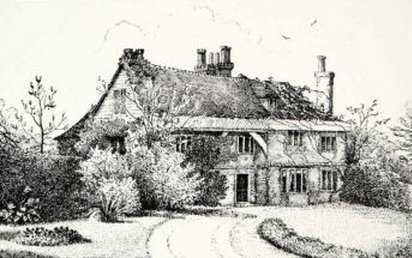 BLOWERS or BLOORS PLACE stood on the south side of the hamlet of West, or Lower Rainham-street, about a mile below the street north-westward, situated on the road leading from Chatham through Gillingham and this parish to King's Ferry and the Isle of Sheppey. A great part of the old mansion was pulled down circa 1798 or earlier to adapt the size of it to that of a farmhouse, though what still remains of it, with the garden walls, offices, and so on show it to have been of large size, well suited to the hospitality of those times, and to the rank which the founder of it, Christopher Bloor, esq., held among the gentry of the county2. The interior displays several pointed-arched doorways, with scraps of sculptured devices: one of the rooms is wainscotted with
oaken panels, exhibiting good carvings of parchment scrolls3.
BLOWERS or BLOORS PLACE stood on the south side of the hamlet of West, or Lower Rainham-street, about a mile below the street north-westward, situated on the road leading from Chatham through Gillingham and this parish to King's Ferry and the Isle of Sheppey. A great part of the old mansion was pulled down circa 1798 or earlier to adapt the size of it to that of a farmhouse, though what still remains of it, with the garden walls, offices, and so on show it to have been of large size, well suited to the hospitality of those times, and to the rank which the founder of it, Christopher Bloor, esq., held among the gentry of the county2. The interior displays several pointed-arched doorways, with scraps of sculptured devices: one of the rooms is wainscotted with
oaken panels, exhibiting good carvings of parchment scrolls3.
Christopher Bloor, esq., procured the disgavelment of his lands by the Act of 2 and 3 Edward VI and died possessed of this manor and seat, having married the daughter of John Colepeper, esq. of Aylesford, by whom he left no male issue, when Olympia, one of his daughters and coheirs, entitled her husband, John Tufton, esq. of Hothfield, to the possession of the same. It appears, from the pedigree of this family, to have descended from ancestors whose original name was Toketon, who, from several deeds there quoted, were possessed, as early as the reign of King John, of lands lying near Meredale, and, in the reigns of Edward I. and II., of others near Sileham and in the borough of Mere and elsewhere in this parish. They removed hence to Northiam, in Sussex, and again, under Edward VI., to Hothfield, in this county, where they have ever since remained.1
John Tufton, abovementioned, continued to reside at Hothfield, and was created a baronet in 1611. His eldest son, Sir Nicholas Tufton, was first created lord Tufton, and afterwards earl of Thanet; and in his descendants, earls of Thanet, the manor of SILEHAM COURT, with BLOORS PLACE, and other estates in this parish, continued down to the Right Hon. Sackville Tufton, earl of Thanet. There is no court held for this manor.1
Queen's Court and Berengrave
The manor of QUEEN'S COURT, with the farm, called BERENGRAVE, in this parish about half a mile south-westward from Bloors Place, were part of the possessions of the crown, and so continued till Queen Alianore, widow of Henry III, and mother of Edward I, in 1273, gave them together with a mill in this parish, by the description of her lands and tenements, with their rights, liberties, and free customs, in the parishes of Renham and Herclope, to the master and brethren of St. Catherine's hospital, near the Tower, to hold in pure and perpetual alms, free from all secular service whatsoever; which gift was confirmed by Edward I in his 20th year. Queen Philippa, wife of Edward III, greatly enlarged this royal hospital, which had been founded by Queen Maud, wife of Stephen, before 1148, and was afterwards augmented by the several queens of England, insomuch, that there was sufficient to maintain a master, three brethren chaplains, three sisters, ten poor women, and six poor clerks.
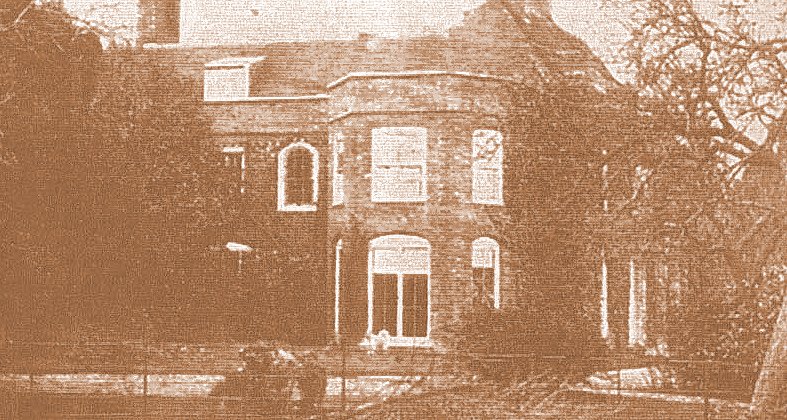
In this state it continued in the reigns of Henry VIII and Edward VI, having escaped the general suppression of such foundations; and, in consequence, the fee of the manor of Queen's court, with Berengrave and other premises in this parish, remained part of the possessions of this hospital. Lady Sackville was the lessee in 1653, and after her, Sir Richard Colepeper1. Mr. John Fowle is the present lessee of this estate, which is held by lease for three lives2.
The Parsonage
The parsonage of this church remained longer in the hands of the crown. Queen Elizabeth granted it, in her 10th year, to Dorothy Stafford, for the term of thirty years, at the yearly rent of sixteen pounds. After which the fee of it was granted to Moyle, and captain Robert Moyle died possessed of it in 1659, whose grandson, John Moyle, esq. of Buckwell, left an only daughter and heir Mary, who carried it in marriage to Robert Breton, esq. of the Elmes, near Dover, and he died possessed of it in 1708. His eldest son Moyle Breton, esq. of Kennington, succeeded him in this estate, which he alienated to Sir Edward Dering, bart. whose son Sir Edward Dering, bart. is the present possessor of it.2
1 Excerpt: W. H. Ireland, ed. & comp. England's topographer: or A new and complete history of the county of Kent; from the earliest records to the present time, including every modern improvement.. (England: 1828). Embellished with a series of views from original drawings by Geo. Shepherd, H. Gastineau, etc. with historical, topographical, critical, & biographical delineations.
2 Excerpt: Edward Hasted, Parishes: Rainham, in The History and Topographical Survey of the County of Kent: Volume 6 (Canterbury, 1798), pp. 4-15. Also found on http://www.british-history.ac.uk/survey-kent/vol6/pp4-15.
3 Excerpt: Edward Wedlake Brayley. The Beauties of England and Wales; or delineations topographical, historical and descriptive of each County. Vol. VIII, pp 686-687. (London: printed by Thomas Maiden, Sherburne Lane, 1808.)
Additional data: Stephen Whatley, ed. & comp. England's Gazetteer: Or, an Accurate Description of All the Cities, Towns and Villages of the Kingdom. Vol. II.. (London: 1751). Printed for J. and P. Knapton, D. Browne, A. Millar, J. Whiston and B. White.
 |
|||
 |
Contact Us Privacy Policy Terms of Use |
© 2006, Kent Online Parish Clerks, all rights reserved. No part of this page or web site may be reproduced either in part or in its' or their entirety in any manner whatsoever without prior written permission of Kent Online Parish Clerks or its' assigns or successors, as the case may be, and the author hereof.   |
|