 |
 |
Kent Online Parish Clerks |
|
 |
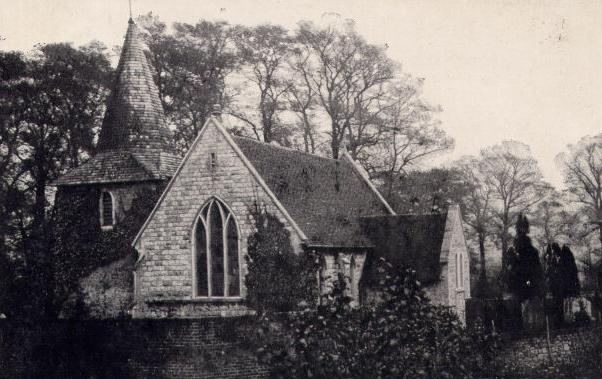 (Click photo for larger view) |
Allington Parish |
|
A View of the Parish
 We are sorry, there is no Online Parish Clerk for this parish. We are sorry, there is no Online Parish Clerk for this parish. |
We have no other information or data for this parish except what is accessed by or detailed on this page. | If you wish to volunteer for this post or have data you wish to contribute, please use the appropriate link on our Contacts page. |
AllingtonAllington is, ecclesiastically, in the diocese of Canterbury, in the archdeaconry of Canterbury and in the deanery of North Malling. The church is named for St. Laurence with original parish registers commencing 1630. 1 Allington, a parish in Malling district, Kent; on the river Medway and the Maidstone railway, 1-1/2 miles north-north-west of Maidstone. Post town, Maidstone. Acres, 612. Real property in 1860, £1,495. Population in 1861, 66. Houses, 10. 1 The manor was granted, at the Conquest, to William de Warrene; passed to the family of Allington, to Sir Stephen de Penchester, to the Cobhams, the Brents, and the Wyatts; was the birthplace of Sir Thomas Wyatt, the poet, and of his son Sir Thomas, who headed the insurrection against Queen Mary; was given, at the confiscation of manors, to Sir John Astley; and passed, in 1720, to the Earl of Romney. A castle was built on it by Warrene, rebuilt by Penchester, extended by the Wyatts and abandoned to ruin by Astley. Considerable part of the structure still stands, and presents interesting features. The exterior is a long parallelogram, with projecting circular towers; and the interior is divided by a range of low building, with archway, into two distinct courts. A wide moat, fed from the Medway, nearly encircles the pile; and a farm house, of picturesque character, built out of fallen parts of the castle, stands adjacent. Gentle hills, mostly covered with wood, rise in the vicinity; and irregular mounds, which probably were ornamental features in the once-noble park, lie between the castle and the river. Wyatt, the poet, describing his life here, says, - "This maketh me at home to hunt and hawk; The living is a rectory in the diocese of Canterbury. Value, £145 with a habitable glebe house. Patron, the Earl of Romney. The church is decorated English, in very good condition. 1 St. Laurence's church was largely rebuilt during the nineteenth century on the site of the original venerable edifice. It is situated along the main approach road to Allington Castle but, as a place of worship, was closed in 1969 and subsequently converted into a desirable residence. For much of its history, St. Laurence operated as a chapelry rather than as a parish church and owing to this and its then remote location, St, Laurence's church must have witnessed many notable visitors and had its fair share of scandals. Notably, during the seventeenth and eighteenth centuries the church was used as a venue for many clandestine marriages, which were conducted without the reading of banns or the requirement of residency or licence. During 1938 a new church was built at the centre of the burgeoning suburbs surrounding Allington and dedicated to St. Nicholas. Some of the furnishings of the church of St. Laurence were moved to St. Nicholas and are in use, today. To learn more about Allington, today, and the new church, visit the St. Nicholas church web site. 1 John Marius Wilson, comp. The Imperial Gazatteer of England and Wales. (London, England: A. Fullerton & Co., 1870). Allington Bibliography-- various. 'Archaeologia Cantiana'. Publisher: Kent, England: Kent Archaeological Society, various dates. [Note: The following volumes can be found on archive.org: 1, 2, 3, 4, 5, 6, 7, 8, 9, 10 (1876), 11, 12, 13 (1880), 14, 15, 16, 17, 18, 19, 20, 21, 22, 23, 24, 25, 26, 27, 32, 34, 35, vol. 1907 supplement.]
Great Britain, Public Record Office. 'Calendar of the patent rolls preserved in the Public Record Office--Edward II, Vol. 1. 1307-1313'Each volume has own index. Publisher: Genealogical Society of Utah d.b.a Historical Books on FamilySearch; http://www.familysearch.org. Great Britain, Public Record Office. 'Inquisitions and assessments relating to feudal aids : with other analogous documents preserved in the Public Record Office, A. D. 1284-1431', Vol. 3. Publisher: Genealogical Society of Utah d.b.a Historical Books on FamilySearch; http://www.familysearch.org. Great Britain, Exchequer. 'The book of fees commonly called testa de nevill, pt. 3'. The Book of fees contains information about the holdings of feudal tenants. Publisher: Genealogical Society of Utah d.b.a Historical Books on FamilySearch; http://www.familysearch.org. Hall, Hubert, 1857-1944. 'The Red book of the Exchequer - Liber rubeus de Scaccario, Vol. 3'. The Red book of the Exchequer was a register intended to preserve important documents comprising charters, statutes of the realm, public acts (Placita), private deeds and ordinances, correspondence. Publisher: Genealogical Society of Utah d.b.a Historical Books on FamilySearch; http://www.familysearch.org. Glencross, Reginald Morshead. 'Administrations in the Prerogative Court of Canterbury, Vol. 1. 1559-1571'. Publisher: Genealogical Society of Utah d.b.a Historical Books on FamilySearch; http://www.familysearch.org. Hasted, Edward. 'The History and Topographical Survey of the County of Kent; Containing the antient and present state of it, civil and ecclesiastical; collected from public records, and other authorities: illustrated with maps, views, antiquities, etc. The second edition, improved, corrected, and continued to the present time'. 12 volumes. Publisher: Canterbury: Printed by W. Bristow, 1797-1801. URL: British History Online Hussey, Arthur. 'Notes on the churches in the counties of Kent, Sussex, and Surrey, mentioned in Domesday book, and those of more recent date'. Publisher: London J.R. Smith,(1852). Letters, Dr. Samantha. 'Kent', Gazetteer of Markets and Fairs in England and Wales to 1516 (2005). URL: British History Online. Page, William, 1861-1934, ed.. 'The Victoria history of the county of Kent'. Publisher: London: Constable (1908). URL: British History Online Sharp, J. E. E. S., ed.. 'Inquisitions Post Mortem, Edward I, File 39', Calendar of Inquisitions Post Mortem, Volume 2: Edward I. Published:(1906), pp. 315-323. URL: British History Online. Sharp, J. E. E. S., ed.. 'Inquisitions Post Mortem, Henry III, File 45', Calendar of Inquisitions Post Mortem, Volume 1: Henry III. Published:(1904), pp. 296-302. URL: British History Online. Location of RecordsThe following list of records is not intended to be exhaustive. There are many records that are awaiting discovery in archive offices throughout Kent and England. This list is intended only to set out those records that are available via at least two relatively easy-to-access avenues. If you have used or discover a record that would be of benefit to other researchers, that is not on this list, please send me an email with the details of the archive - name, address and archival call number. Census
Church Records, Church of England
Church Records, Non-Conformist
Parish chest records
Workhouse and Poor Law Records
Land Records
Assizes and Sessions Records
|
| Record Type | Dates | Archive 1 (Addresses) |
Corresponding LDS Family History Library film numbers (Find a centre near you) |
| Hearth tax | Currently under revision | ||
| Victuallers Recognizances | Currently under revision | ||
| Churchwarden's Presentments | Currently under revision | ||
| Parish rate books | Currently under revision |
School Records
| Record Type | Dates | Archive 1 (Addresses) |
Corresponding LDS Family History Library film numbers (Find a centre near you) |
| Currently under revision | |||
Chronology
Coming Soon
Church Registers
- Monumental Inscriptions
- Christenings 1558-1640
- Christenings 1558-1640
- Christenings 1641-1700
- Christenings 1701-1775
- Christenings 1776-1912
- Marriages 1558-1640
- Marriages 1641-1753
- Marriages 1754-1810
- Marriages 1818-1835
- Marriages 1838-1913
- Burials 1558-1640
- Burials 1641-1700
- Burials 1701-1812
- Burials 1813-1912
- IGI batch #s, Boyds, Pallots, BVRI, NBI
- RG 4: Non-parochial registers 1567 to 1858
- RG 5: Protestant Dissenters' Registry
- RG 5: Wesleyan Methodist Registers
- RG 6: Society of Friends
- Rg 7: Clandestine Marriages & Baptisms in the Fleet Prison, King's Bench Prison, the Mint & the May Fair Chapel ranging from 1667-c1777
- RG 8: British Lying-in Hospital, Holborn (1749-1868); burials at Victoria Park Cemetery, the New Burial Ground, Southwark, Bunhill Fields Burial Ground, Hackney, and the Bethnal Green Protestant Dissenters Burying Ground; registers of Chapels Royal at St. James's Palace, Whitehall, Windsor Castle; archive of the Russian Orthodox Church, London (1721-1927)
- RG 32: Overseas Births, Baptisms, Marriages, Deaths and Burials Abroad and on British & Foreign ships, of British subjects, nationals of the colonies, the Commonwealth and countries under British jurisdiction. Also Lundy Island Devon and Channel Island records (1831-1969). Some deaths of WWII personnel, prisoners of war, civilians, internees, deaths through aircraft lost in flight.
- RG 33: G.R.O. Overseas Birth, Marriage, Death and Burial of British Subjects including those onboard ships 1627 to 1960
- RG 34: Marriage registers of British embassies, English churches and chaplains abroad, notification of marriages of servicemen during service abroad, and documents deposited for safekeeping (1861-1921).
- RG 35: Foreign Deaths. Incomplete collection of certificates of British military deaths in France and Belgium, 1914 to 1921; certificates issued by foreign authorities and churches, entries in the registers of British embassies, English churches and chaplains (1791-1921)
- RG 36: Births, Marriages and Deaths in the Protectorates etc of Africa and Asia - Nyasaland, Kenya, Somaliland, Uganda, Sudan, Palestine, Sarawak, Malaya, including Johore and Selangor, British North Borneo (1895-1965)
- BT Series: 158, 159, 160. Registries of Shipping and Seamen Births, Deaths and Marriages of Passengers at Sea(1854-1908); Deaths of British Nationals at sea (1875-1888); Births of British Nationals at sea (1875-1891), respectively.
- Published Records
Census
Parish Chest
Records
- Settlement Certificates
- Removal Orders
- Bastardy Examinations
- Parish-assisted Immigrants
- Churchwarden's Accounts
- Overseer's Accounts
- Surveyor's Accounts
- Workhouse Records
- Pew Rents
- Donors' Rolls
- Vestry Minutes
- Bishops' Visitations
- Parish Magazines
- Parish Histories
Directories
Total Population
1801 - 44
1811 - 55
1821 - 45
1831 - 37
1841 - 49
1851 - 51
1861 - 66
1871 - 93
1881 - 147
1891 - 157
1901 - 141
1911 - 117
1921 - 97
Allington Distance to
London 29.7 mi.
Canterbury 24.8 mi.
Ashford 18.6 mi.
Bromley 22.4 mi.
Chatham 5.1 mi.
Cranbrook 13.2 mi.
Dartford 16.9 mi.
Deptford 26.7 mi.
Dover 36.8 mi.
Faversham 17.0 mi.
Folkestone 32.0 mi.
Gravesend 11.9 mi.
Greenwich 25.0 mi.
Hythe 29.7 mi.
Maidstone 1.8 mi.
Margate 38.7 mi.
Milton Regis 10.8 mi.
Queenborough 14.1 mi.
Ramsgate 40.0 mi.
Rochester 6.9 mi.
Sandwich 36.6 mi.
Sheerness 15.4 mi.
Tenterden 17.3 mi.
Tunbridge 15.0 mi.
Woolwich 23.6 mi.
Directories
Municipal & Public Records
- Mayors
- Town Clerks
- Recorders
- Chamberlains
- M.P.s
- Jurats, Aldermen and Common Councilmen
- Electoral Register
- Freeholders
- Freemen Index
- Freeman's Roll
- Masters Index
- Pubs, Taverns, Inns, Alehouses
- Victuallers
Wills & Estate Records
- AD index 1448-1857
- CC index 1448-1857
- PCC 1338-1858
- PPR 1858-1925
- Depositions
Court Records
- Gaol Returns
- Quarter Sessions
- Transportations
- Summons for Pavement Repairs
- Tithe Apportionment c1830s
- Protestation Rolls c1641-1643
- Oaths of Allegiance and Supremacy 1662
- Oaths of Allegiance c1720s
Military Records
- IWM War Memorials
National Inventory - Local War Memorial
- Militia Lists
- Muster Rolls
- Description Books
Land Records
& Maps
- Parish Map
- Hasted's History
- Victoria County History
- Deeds, Mortgages, etc.
- Rated Property Returns
- Returns of owners of land, 1873
- Manor Court Baron
- Manor Tenancy Rolls
- Manors, Castles & Holdings of Significance
Tax Lists
- Poll Tax
- Hearth Tax
- Window Tax
- Hair Powder Tax
- Land Tax Assessments 1780-1831
- Land Tax Assessments 1799-1805
Other Records
- Apprenticeships
- Immigration
- School Records
- Notable Events
- Nefarious Activities
- Visitation, 1612
- Visitation, 1663-1668
Village Resources
- Early Residents, 1300-1600
- Local Families
- BBC Local News
- Allington Family Seekers
- Kent Rootsweb message archive
- Sussex Plus Rootsweb archive
- Parish Church News
- Parish Council
- Borough Council
- Tourism, Official Site
- Social Facilities
- Commercial Directory
- Francis Frith photographic collection
- Images of England photographic collection
- Pastscape - English Heritage
- Geograph Photographic Collection
- Flickr Photographic Collection
- Listed Buildings
- Photographs from our Contributors
- Local Walks
- Village Residents' Association
 |
|||
 |
Contact Us Privacy Policy Terms of Use |
© 2006 Kent Online Parish Clerks, all rights reserved. No part of this page or web site may be reproduced either in part or in its' or their entirety in any manner whatsoever without prior written permission of Kent Online Parish Clerks or its' assigns or successors, as the case may be, and the author hereof.   |
|